Ditch the food journal and lose weight in a more intuitive, sustainable way. Here’s how to shed pounds without obsessing over every calorie while building a healthier, happier relationship with food.

1. Prioritize Food Quality Over Counting Numbers
The type of food you eat matters more than just calorie totals. Ultra‑processed foods often prompt overeating, even when calorie intake matches that of minimally processed meals—because they’re engineered to be hyper-palatable. A recent trial found participants lost twice as much weight eating home‑cooked, minimally processed meals than those eating nutritionally similar ultra‑processed foods. Instead, focus on whole foods—lean proteins, fruits, vegetables, legumes, and whole grains—to naturally support satiety and energy balance. [1]
2. Build Awareness with Intuitive Eating
Rather than rigid rules, intuitive eating helps you tune into hunger, fullness, and satisfaction cues: Reject the diet mentality and let go of “good” or “bad” food labels, honor your hunger and feel fullness, treating them like natural signals. Over time, this fosters positive body image, reduced disordered eating, and improved well-being. [2]
3. Simple Swaps That Lower Calories Naturally
Even without counting:
– Use smaller plates to trick your brain into feeling satisfied faster.
– Eat lean protein and fiber-rich foods (and stay hydrated). These promote fullness and curb hunger. Excellent sources include eggs, beans, poultry, veggies, legumes, and oats.
4. Tune Into Behavior, Not Food Journal
You don’t need a rigid food log. But boosting awareness helps:
– Occasional journaling—like tracking meals or hunger patterns—can double weight-loss success compared to no records at all.
– Use portion control techniques and practice kindness when slip-ups happen.
5. Create Habits to Support a Natural Calorie Deficit
Striving for lasting behavior change beats tracking:
– Sleep 7–9 hours/night to regulate appetite hormones and reduce cravings. [3]
– Stay hydrated—water supports metabolism and can reduce hunger signals.
– Choose physical activity that you enjoy, whether strength, walking, or sports. It supports metabolism without punishing routines.

6. Reduce External Triggers & “Food Noise”
Less dieting chatter = more clarity:
– Minimize exposure to “diet culture” messaging by shifting focus from weight to health and well-being.
– A personal account shows “food noise” (internal dieting chatter) fades through mindfulness, volume eating (big portions of low‑calorie, nutrient‑dense foods), and structured meals—again, without strict calorie tracking.
7. When Structure Helps, Use It Wisely
For those who need guidance (without obsessive counting):
– A personalized nutrition plan—tailored to your biology and food preferences—can produce better results than generic calorie‑based regimes.
– Think weekly check-ins or intuitive eating with a bit of nutrition knowledge to keep you on track without rigidity
✅ Practical Action Plan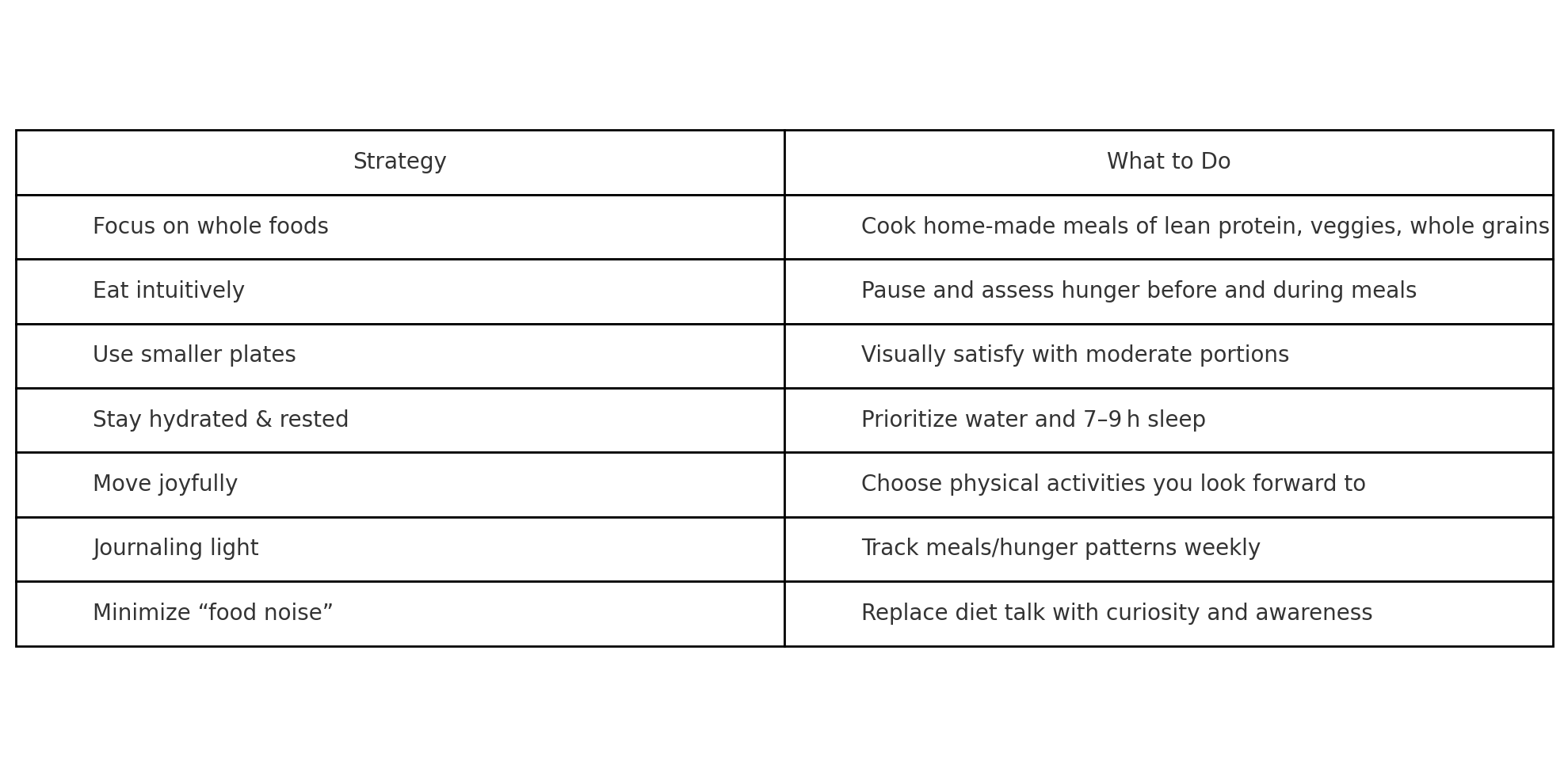
Conclusion
You don’t need to meticulously count every calorie to lose weight. By focusing on food quality, internal cues, and sustainable habits, you can naturally lean into a calorie deficit—and maintain long-term change without deprivation or guilt.